Kyoko Minegishi

Interviews and insights inspired by the Maze Bright philosophy.

Intimacy as Strategy: Entering Japan When Cultural Access Requires Stewardship, Not Scale
Why Some Experiences Can’t Be Scaled… and Shouldn’t Be
Experiences shape us in ways, products alone, can’t.
We remember where we were, who we were with, how we felt… long after the details fade. Travel, music, food and shared moments leave what psychologists call episodic memory: experiences stored with emotion, context and meaning.
That’s why experiences consistently rank among the most valued forms of spending. In 2025, American are spending 15% more on experiences than on goods and global travel spending has increased 9% in 2025 with gross bookings rising from $1.6 trillion to $1.7 trillion (Travlr). People aren’t just buying escape. They’re investing in perspective, connection and renewal. But not all experiences carry the same weight. Some are entertainment and others are living traditions carrying centuries of history, ritual and meaning.
Untold Japan operates in the “living tradition” category where the “product” is a relationship between artisans, stewards, and guests, rather than a repeatable service with infinite capacity. It’s closer to a heritage ecosystem than a SaaS play. They don’t offer “sightseeing” but rather intimate cultural immersions inside one of the most tradition-bound cultures - Japan. From private geisha evenings to time spent with master potters, they design encounters with living traditions that have survived for centuries precisely because access has been careful, contextual and rare.
“It’s not about showcasing Japan to the entire world. It’s about showcasing it to the right people for the right reasons.”
- Joshua Lassman
Most businesses won’t or shouldn’t adopt this level of selectivity. But the underlying discipline is generalizable: when your offer depends on cultural capital you do not own, you scale stewardship before you scale reach. That philosophy shapes who you invite, how you price, which channels you use and which partners you’re willing to walk away from.
This philosophy stands in sharp contrast to today’s growth-at-all-costs mindset. Global business is obsessed with fast reach - more markets, more users, more impressions. But, culture doesn’t behave like software. Some of the most powerful products, brands and experiences lose trust the moment they’re scaled without care. For leaders expanding across borders, the risk isn’t just dilution, it’s misinterpretation. In market‑entry terms, misinterpretation shows up as campaigns that backfire - like Western brands re‑using European ads in Japan that unintentionally violate norms around privacy and modesty - partnerships that never renew, and regulatory or community pushback that quietly stalls expansion.
This isn’t an argument against growth.

It’s an invitation to pause and consider the careful translation of the cultural nuances. An invitation for leaders to take responsibility for how meaning changes when something moves from one context to another. And careful doesn’t mean slow, it means considered. In my conversation with Joshua Lassman, founder of Untold Japan, one truth kept resurfacing: intimacy of Untold Japan’s experiences is what allows the Japanese experience and context to be truly memorable and meaningful.
When experiences are small, unhurried, and relational, people don’t just observe culture, they begin to understand it. When experiences are rushed or crowded, meaning flattens and what remains is spectacle. A geisha performance viewed from a distance becomes a show. Pottery mass-produced for tourism becomes a souvenir. Craft experienced without proximity becomes content.
“If you take 30 people in with cameras, they all take photos and leave. If you take two people who really care, they’ll sit, listen and end up supporting that artisan for years.”
That closeness is intentional. Groups are capped. Experiences are private. Time is unhurried. Not to create exclusivity but, because meaningful connection to what you're witnessing requires conditions that don't survive at scale. The Untold experience is being invited into such intimate proximity of the art and sometimes the process, that you’re close enough to feel the cultural fabric you’re stepping into.
“I’ll take someone to see an artisan and it’s meant to be an hour and a half. And then we end up staying four hours because they’re talking, they’re curious, they’re really there.”
Across his work whether with a master puppeteer, a potter or a geisha - the pattern is the same. Intimacy changes how people interpret what they’re witnessing. The experience stops being observational and becomes relational.
For CMOs prioritizing engagement over reach, depth over breadth, retention, renewal rates and the like - this distinction matters deeply.
And it starts with the leadership immersing and understanding the culture themselves, before trying to influence the end user/consumer. I’m a big fan of leaders that take the time to listen, spend the time for longer in‑market immersion visits, consider slower roll‑out of high‑symbolism campaigns and integrate formal roles for cultural translators embedded in deal and creative teams. It’s not the only way but it’s a different style of leadership and one I’ve seen create a lasting trust and resonance both internally and externally where the brand or initiative is a benchmark reference for decades and generations.
Mono no Aware - the pathos of things
Experiences are fragile by nature. Unlike products, they can’t be preserved, warehoused or perfectly replicated. They exist only in that room, on that day, shaped by the people present and the trust between them. That ephemerality is precisely what gives them value and why mishandling them also carries real consequences. When I asked Joshua, which craft or artistry he would choose to preserve if he could, his thoughtful answer was - geisha. An art form widely misunderstood, often eroticized and quietly disappearing.
“Ninety-five percent of Japanese people will never experience a real geisha performance. It’s not something you buy tickets to. You’re invited by the “mama-san” (matriarchal steward of that geisha house). You’re trusted.”
Geishas are not performers. They are artists trained across multiple disciplines - dance, music, storytelling, conversation, presence - learning over years how to read a room, when to speak, when to disappear, when to hold silence.
“They’re reading the room the entire time. That level of emotional intelligence takes years to develop.”
It’s a living practice that only survives inside the women and apprentices that train for 5-6 years, beginning at the age of 15.
“If geisha culture disappears, there is nothing else like it. There’s no adjacent version. That’s the end.”
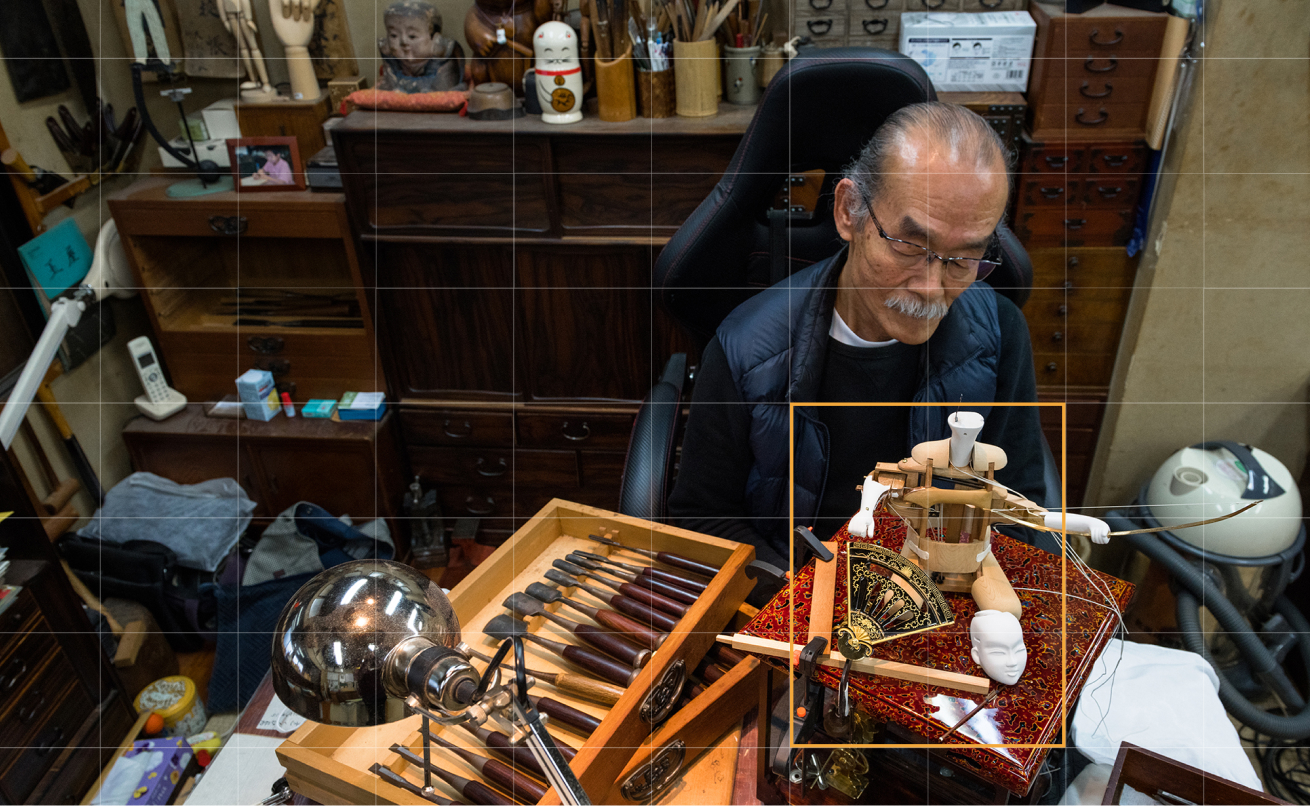
There is no artifact, sensorial or intimate enough that can sit in a museum to be enjoyed years later. The other artisans Joshua works with have different challenges. The last master of Karakuri puppet making has no apprenctice. One potter in Toyama showed him a mound of white clay, the last clay of its kind.
“He said, ‘When this is gone, that part of my work is finished’. He’s passed his knowledge to his children. The material and the specific representation of this pottery style will disappear, but the understanding won’t.”
Joshua’s care and stewardship is surprising as a British citizen having arrived in Japan in his teens and quickly drawn to stay now throughout his adult life. He doesn’t see himself as a spokesperson or marketer. He’s a bridge.
“I’m not here to explain Japan to the West or the West to Japan. I’m here to make sure meaning doesn’t get lost.”
He has a deep emotional investment in thinking about what must be protected, what can evolve, and what will inevitably end. That’s why Joshua is also deliberate about saying no to clients, to requests to the “golden route” version of Japan.
“We’ve turned people away. Not because they were bad people but because they’re requesting access to cultural traditions for the wrong reasons. These artisans open their homes, not shops. If they feel disrespected once, the door closes… for everyone. If someone doesn’t want outsiders, I respect that. I’ll never force access. That’s not my role.”
And I guess that’s the wider consideration, what ripple effect does your actions have? What doors would close if there was a misstep and bad acting due to your naïveté? We’ve seen public backlash play out whether from a company, a brand or just a human on the subway. I wonder how many leaders truly feel responsible to steward a culture’s trust, a heritage process or a community. To collaborate but also discern and decide when access serves the culture and when it doesn’t. It’s an immense responsibility Joshua has taken on as a non-Japanese person. And it’s a huge responsibility for leaders working across cultural spaces.
“Even when people speak the same language, they’re not culturally fluent. Someone has to translate context.”
In an era of AI knowledge, intelligence and translation - we still need the nuance of the human. And as we see speed increase and acceleration of global expansion, I believe this care and consideration will matter more than ever.
“You can’t just launch in Japan next week. It takes months of meetings, trust-building and shared understanding (different to other countries). That patience is the strategy.”
I think you have to feel responsible. To care enough to spend the time to immerse and educate yourself. There’s a fragility around culture that can’t be forced or bulldozed into. For brands and CMOs, this is the difference between extracting meaning from research alone versus taking the time to absorb the culture through proximity, time, presence, and restraint. Market entry doesn’t fail because of bad decks. It fails because no one is accountable for interpretation. Inside most organizations, this “cultural translator” role is unnamed, underpowered or outsourced when it should be central to how leaders decide where, how and with whom they show up. At minimum, that means assigning clear ownership for cultural translation on market‑entry teams, giving that person or council sign‑off rights on high‑stakes launches, and resourcing them with time in‑market and direct access to local stewards. Without that understanding, even well-intentioned expansion flattens meaning and erodes trust.
Zoom out and Joshua’s philosophy becomes a leadership framework.
- Scale is a decision, not a default.
- What you keep small protects what you scale next.
- The people closest to the culture - not the ones closest to the deal - should shape how you enter.
The Maze Bright way - what I’m increasingly clear about - is depth over breadth. But they're not mutually exclusive and the smartest in the game do both. Intimate experiences change people because they carry context. Context creates care. Care sustains systems. And systems - not the experiences themselves - can scale.
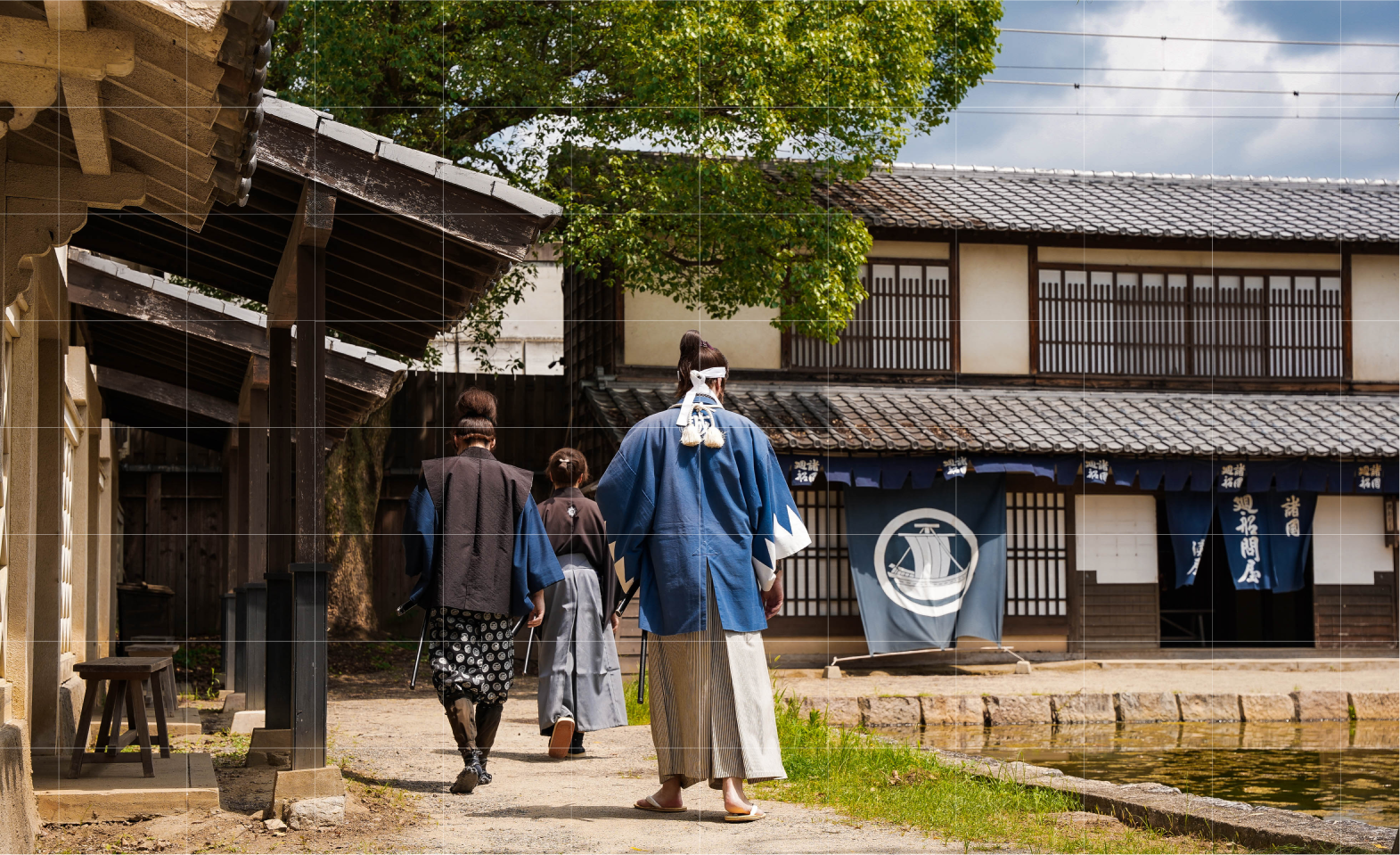
In practice, that translates into 4 principles for Cultural Market Entry
- Proximity before projection: Empower leaders to invest in relational understanding before projecting the brand into local symbols or traditions.
- Accountability for interpretation: Enable someone in the team to own cultural translation — not as a side role, but with sign-off authority and time in-market.
- Restraint as leverage. Saying no — to clients, to channels, to speed — can be a powerful amplifier and accelerator, even though it can feel like a cost at the time.
- Measure depth, not reach. Identify the right success metrics for resonance - partnership renewal rates, steward willingness to work with you again, depth of engagement in key communities.
“Money doesn’t buy access here. Respect does.”
In Short…
Some traditions can’t be blitz scaled and… shouldn’t be.
Joshua Lassman shows what it looks like to build a business around that fact: designing for intimacy, choosing the right people over more people, and standing as a cultural bridge rather than a marketing channel.
As leaders push faster across borders, instead of asking...
"How many people can we reach?"
I invite you to "who is accountable for what gets lost in translation — and are we willing to keep something small so the relationship stays intact?”