Kyoko Minegishi

Interviews and insights inspired by the Maze Bright philosophy.

The Stories That Shape Us: Cross-Cultural Brand Strategy and the Art of Narrative Archeology
Why Does Japan Mourn a Robot Dog While New York Graffitis an AI Pendant
In 1952, Osamu Tezuka introduced Japan to Astro Boy - a robot child built from grief, designed with a conscience and raised as a son. In 1968, American audiences met HAL 9000 - a machine that watched, calculated, and killed. Same decade, same technology rendered in fiction, two completely different origin stories. One culture got a child to protect. The other got a threat to survive. Sixty years later, LOVOT — a knee-high companion robot with enormous eyes and no practical function sells out in Japan. Its entire purpose is to be held. Meanwhile, in New York, subway ads for Friend, an AI companion pendant, get graffitied into oblivion. "AI trash." "Go away." "You'll never replace us." Similar product category. Same loneliness epidemic. Opposite reception.
And when you sift through the back catalog of all the characters I grew up with in Japan, they're all in some way a robot. Doraemon, a robot cat sent to help a struggling, awkward kid and ultimately be his companion. Tamagotchi, a digital pet to nurture. So when there is a funeral for an AIBO - a robot dog - at a Buddhist temple, the emotion is real. One culture learned to create compassion with machines. The other learned to fear them. We could potentially date this difference back to religion. Animism is a strong cultural fabric in Shintoism and Buddhism, the notion that everything has a spirit, whether rocks, trees, rivers, objects. And if God "made us in his image", then anything non-human might be "in-humane" - by definition, cruel and heartless. But I relate to both sides, having grown up in both cultures. It's not strange for me to believe there is a Totoro living in the forest in the most spiritual sense. And I understand why people are fearful of concepts that mimic the Terminator in the most practical, fearful AI & technology sense. And while it's not fair to distill the complexity of the topic into such simple categorizations, it provokes an interesting conversation.
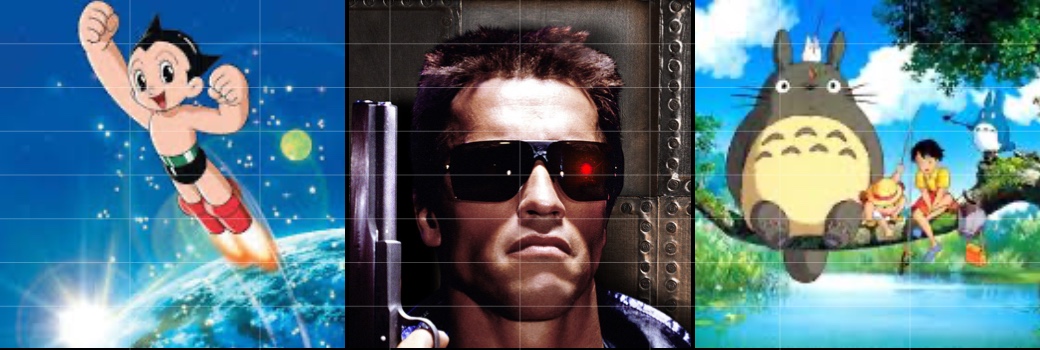
These stories determine when things feel familiar and when they feel foreign. And when you translate one product from one market to another, there's a productive tension in between - one that leverages curiosity, discovery and awe when you encounter something new. Similarly, when you grow up between two cultures, you become uniquely equipped to translate across that tension.
Mari Iwahara and I share that experience, each in our own way. She grew up in New York; I moved every one to two years between the US and Japan but spent my formative teenage years in Tokyo. She was surrounded in Saturday Japanese School by Japanese expats who grew up in the Japanese school system. I was surrounded by kids from sixty-plus countries in an English-speaking international school. And while I grew up in Tokyo and she grew up in New York, I would argue she grew up more Japanese - swiftly learning to code-switch between two cultural codes, when to speak, how to stand out or not, what earns trust in each world. That dual training inspired her company, Sibling - a cross-cultural brand consultancy helping Japanese companies enter the US market.
Why Japanese Websites Look Cluttered
Have you ever been surprised by how cluttered and UX-unfriendly some Japanese websites are? It's ironic for a culture so design/aesthetic-sensitive. I wrote a previous article on the concept of ma and for a culture that sits in negative space, that pregnant pause, it has always frustrated me why Japanese digital design feels so cluttered. But, to understand this paradox, there might be something in the cultural layers in how each culture “creates trust” with the consumer.
"Americans are a lot more emotional buyers than Japanese ones," Mari told me. "It's almost like, tell me how I'm supposed to feel. Americans want to know how this product or brand aligns with their values, their interests and then they decide. In Japan, it's a lot more about presenting information. These are the specs. These are the features. And the consumer makes what they make of it."
In Japan, the seller's job is to remove every burden from the buyer. You present everything so the buyer never has to ask, search, or feel uninformed because asking is a social cost. It implies you didn't anticipate their needs. Omotenashi, that deeply ingrained culture of anticipatory service, extends to information design: Japanese companies front-load every detail so the buyer can draw their own conclusions without requesting anything additional. American consumers work the opposite way. They want to be moved first, decide fast. A high value is placed on curation, simplification, signal over noise. We trust people, influencers, brands to help dictate our tastes. Neither approach is wrong. But when a Japanese brand enters the American market carrying only a spec sheet, it lacks the emotional context that American consumers need to connect. In order to be moved, there needs to be more story, curation and sometimes simplicity to translate to a new audience.
Made in Japan
But, sometimes those stories are already ingrained and aren’t even your product’s to tell. Suntory Wellness is (in Japan), a whisky empire that also happens to run a wellness brand. When they decided to bring Kizen - an all-in-one men's skincare product - to the American market, they carried all the right ingredients but lacked an angle to build trust. In Japan, the product sold itself through Suntory Wellness's corporate reputation, salaryman (Japanese businessmen) networks, and the post-Covid realization that your face on Zoom matters. That story worked because it ran on a pre-existing track - brand loyalty, shared corporate identity, a homogeneous consumer base that moves in visible consensus. In the US, none of that existed. American men don't know Suntory as a wellness company, nor is there this homogenous demographic called “businessmen”. Men barely know the brand name beyond the whisky bottle. Mari's team ran user interviews, showing men initial packaging mockups - the name Kizen rendered in English alongside Japanese kanji.
"When Americans first look at kanji, their initial thought is, okay, it's Asian. And then they think - is this Chinese or is it Japanese?" Mari described. "And the moment they realize it's Japanese, their perception goes way much higher. They're like, oh, this must be a great product because Japan does everything better than us."
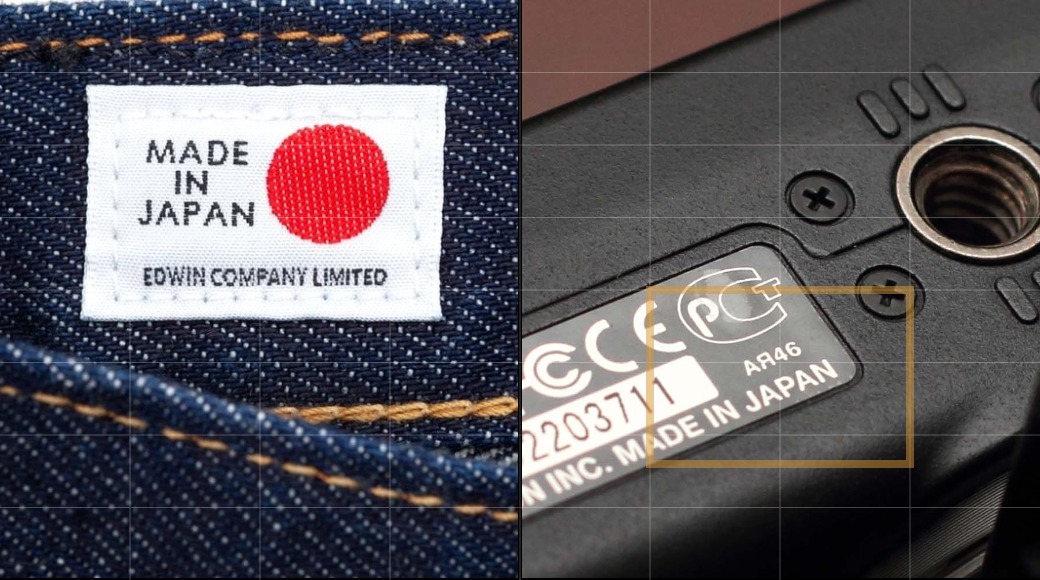
"Made in Japan" still carries equity - decades of trust built by Sony, Honda, Nintendo and their eighties predecessors. It surprised Mari how readily American consumers distinguished between Asian cultures, importing an entire nation's track record as a shortcut for trust. It also puts the responsibility on Japanese brands to uphold that reputation which interestingly gave license but also expectations to ensure its product was delivering at the highest quality. That bias became a strategic lever and led us to discuss when and how dialing up and down the "Japaneseness" of a product either activates trust or when it also doesn’t translate.
Dialing Down the Japaneseness
Mari described a SaaS data company, Lazuli - Japanese-founded, engineering-driven start-up, raising its Series A whom needed to appeal to American investors. In the tech world, the aspiration is still to look like a Google, a Microsoft. In the minds of the Japanese founders, credible tech looks American. So the work leaned toward dialing the Japaneseness down. Strip the manga-esque illustration style, the soft colors and cartoonish product demos that read as Japanese even when the company was trying to look Western. Replace the overly spaced layouts that made sense in Japanese typography but read as amateur in English. And tighten the fonts. Not because the founders had bad taste, but because the Japanese language has thousands of characters, which means far fewer font families exist. Companies default to matching their English typeface to their Japanese one, which usually means something generic like Roboto. In English, fonts carry personality. In Japanese, fonts carry legibility. So what looked cohesive in Japan looked anonymous in the US. But the deeper work wasn't visual. It was existential.
One of the founders said something to Mari that stopped her:
"I guess perception is something that we have to define for ourselves."
He genuinely didn't feel license that he could do that. In Japan, you present the product, present the evidence, and people make what they make of it. The idea that you could design how you're perceived, that you could define your story rather than let others assign one, was a new concept to him. When Mari's team presented strategic territories - positioning spectrums from safe-engineering to bold-thought-leadership - the founders gravitated toward a middle path they hadn't known was available to them. Not the buttoned-up IBM posture they assumed they needed, but something closer to who they actually were: creative mavericks who had built an entirely new way of connecting e-commerce data that nobody else was doing.
"At one point they were like, is that too much? Like, are we allowed to say that?" Mari recalled. "And I was like, yes, you are allowed to claim that. That's who you are. I feel it from talking to you. It's in your DNA."
In America, companies stake claims first, then figure out how to get there. Japanese companies have all the proof and still ask if it's enough. In a culture that rewards humility and punishes the nail that sticks up, entering a new market can offer a kind of freedom, permission to occupy an identity that was already true but culturally unspeakable. Anyone who has traveled to a foreign country knows that feeling of license to be someone untethered from your usual cultural norms and lifestyle. For brands crossing markets, the feeling is the same. They didn't erase the Japaneseness, they dialed it down to a position where the origin was still present, still legible, but the brand spoke the narrative language of the market it was entering.
Beyond the Dial: When Neither Culture’s Playbook Fits
Not A Hotel is a startup selling architecturally stunning second homes in remote Japanese locations through a fractional ownership model. They partner with world-class architects to design otherworldly properties, then sell them before they're even built, with mostly CGI imagery. In Japan, people weren't buying the brand, they were buying properties on trust in the founder's name. The whole thing ran like a product catalog: browse, click, buy. No story. No emotive signaling. Just extraordinary homes and a bare-bones e-commerce site.
When they wanted to attract Western buyers, the instinct was to go full luxury - Aman aesthetics, Zen restraint, the expected moves. At first glance, it made sense. Japanese luxury in the Western imagination is serene minimalism. That's the pre-trained narrative. But, Mari's team was also conscious how crowded that luxury story was in the Western market. Every high-end hospitality brand is already performing that narrative. And more importantly, it wasn't who they were. Their DNA was startup-scrappy, creative-first, partnering with architects to build literal pieces of art in places you've never heard of. Going full Aman would mean assimilating into a language that erased exactly what made them interesting.
So Mari's team dug into what truly made them different, likening them to a Pharrell or Nigo, a culture maker who expresses things in nontraditional ways. The target wasn't the Aman crowd seeking expected luxury. It was culture makers and art collectors, people who want access to something they've genuinely never seen before. Bold fonts. Expansive imagery. And the name itself — Not A Hotel — was already a bold claim the brand hadn't fully embodied. "We should definitely dial that up," Mari said. "If you're not a hotel, then what are you?"
"We kind of pushed them into defining something that was new to themselves," Mari said. "Not just adapting to the US market."

The brand went from a second-home startup to what Mari described as "a brand that helps people imagine new ways of living." They didn't find a position on the existing dial between Japanese and American. They invented a new one, closer to their actual DNA than either extreme would have been. The expected luxury move would have erased them. The scrappy Japanese original would have confused the market. The answer was neither dialing up to preserve the Japaneseness nor dialing it down to assimilate, but to boldly flex an originality that transcended both — the way Issey Miyake, Comme des Garçons, and Muji did before them — Japanese brands that refused the expected position and became uncategorizable because of it.
Narrative Archaeology: Reading the Cultural Layers in Every Product
Every product is an artifact. It carries layers of the culture that made it, the assumptions that shaped it, the stories its creators absorbed so deeply they stopped recognizing them as stories. A skincare product with kanji on the label carries fifty years of Sony, Honda, and the trust that "Made in Japan" built long before the product existed. A SaaS pitch deck with manga illustrations and a generic font carries a communication culture where presenting everything is the respect. A bare-bones property listing with no narrative carries a persuasion culture where the product is supposed to speak for itself.
Mari's work at Sibling is archeological in a sense. Anthropologists call this object biography, the idea that every artifact accumulates meaning as it moves through different social contexts. She looks at the product as it arrives - the visible artifact - and excavates the cultural layers embedded in it. Which stories are baked into the way this thing presents itself to the world? Then she turns to the receiving culture and asks the harder question: which of these layers will land, which will confuse, and which need to be dialed up or down to match the stories this audience already carries?
"The biography of an object should not be restricted to an historical reconstruction of its birth, life and death. Biography is relational and an object biography is comprised of the sum of the relationships that constitute it." [Joy, 2009]
- For Suntory Wellness - Kizen, the buried layer was trust and the American audience already had the sediment to receive it. Dial up.
- For the SaaS company - Lazuli, the buried layer was a communication code that read as modesty in Japan and anonymity in America. Dial down.
- For Not A Hotel, the excavation revealed something deeper than either culture's expected narrative could hold, so instead of dialing up or down, they built a position that didn't exist before.
Cultural researchers have been mapping these fault lines for decades. In my global roles, I used to give Erin Meyer's Culture Map to every leader in my team and the frameworks still hold — eight scales along which cultures diverge, three of which run directly underneath every story in this article.
- How does a culture build trust: through relationships or through results?
- How does it persuade: from principles or from proof points?
- How directly does it communicate: high-context, where meaning lives between the lines, or low-context, where you say exactly what you mean?
Mari’s investigations add:
- How do we maintain your identity, while localizing for a new audience?
- What elements of your brand’s DNA do we keep, and what can be adjusted?
- How does a brand stay true to itself, while simultaneously catering to a new audience?
- Brand localization is a delicate balance of identifying your core (who you are) with reinvention (who you can be).
These scales can act as a field guide. But the archaeology itself requires something harder to come by: the ability to look at the same artifact and see two readings at once. To know what a product means in the culture that made it and what it will mean in the culture receiving it.
That's what growing up between two cultures trains you to do. Not theoretically. Daily. At every dinner table, in every classroom, in every moment where the obvious thing to say in one language is the awkward thing to say in the other. Mari and I learned to read buried narratives because we had to, because the stories underneath were never the same on both sides, and the gap between them was where we lived. Some call this the ability to code-switch, others call this the 3rd culture.
In Short…
The stories that shape us are the ones that were already running before we arrived. Decades of narrative sediment laid down by the fictions we watched, the rituals we practiced, the things our cultures decided were obvious. You can't rewrite them. But you can learn to read them. And if you're trying to bring something across cultures, that reading is the work before the work. The archaeology before the architecture.
The distance between the starting culture and the receiving market's answers give you a compass direction: enter the existing narrative, rewrite it from within, or build one that didn't exist before. The product is the artifact. The culture is the dig site. And the strategist's job — the one that no framework fully replaces — is knowing which layers to surface for which audience.
Work With Sibling
https://www.sibling.info/